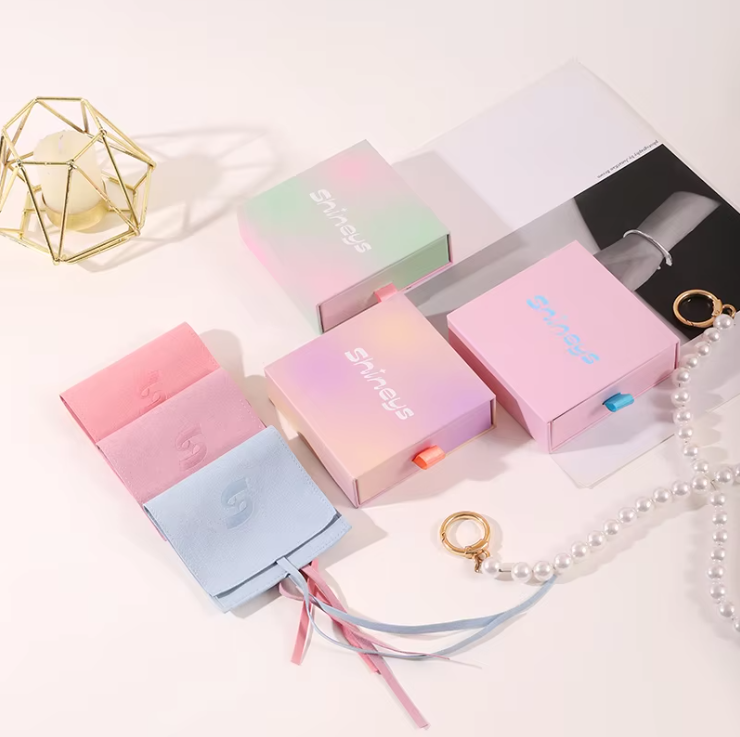
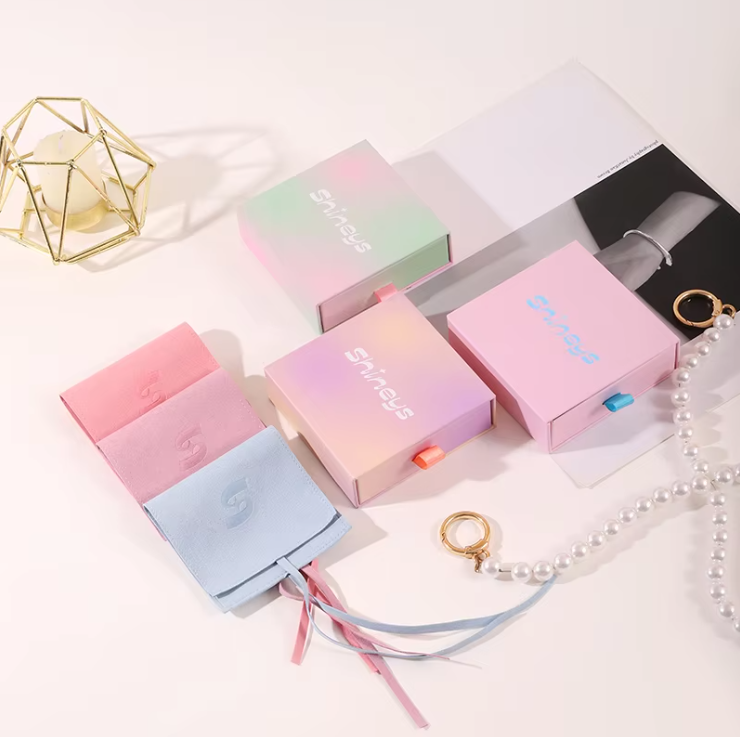
For jewelry brands that have moved past their early growth stage and are looking to differentiate themselves in an increasingly crowded market, custom jewellery boxes developed through OEM and ODM packaging programs represent one of the most effective — and often underutilized — tools for building lasting brand identity. While OEM (original equipment manufacturer) and ODM (original design manufacturer) are terms more commonly associated with electronics and consumer goods, the same principles apply directly to packaging: OEM means a manufacturer produces boxes to a brand's exact specifications and designs, while ODM means the manufacturer offers design development support, helping brands that may not have in-house packaging designers bring a vision to life.
The difference between generic, off-the-shelf packaging and a custom-developed box is immediately apparent to customers, even if they couldn't articulate exactly why. Generic boxes, however nicely finished, carry an implicit message that the product inside could be from any brand — because, in a literal sense, the same box probably is being used by competitors. A custom box, by contrast, is unmistakably tied to one brand. Every dimension, every color choice, every interior detail has been considered specifically for that brand's products and aesthetic. This isn't just a matter of vanity — it has real commercial implications, because packaging that's instantly recognizable becomes part of how customers identify and remember a brand, especially in gifting contexts where the box itself is often seen by people who didn't make the original purchase.
What an ODM Design Process Typically Looks Like
For brands without an in-house packaging designer, an ODM-capable manufacturer can be an invaluable resource — but understanding what this process actually involves helps set realistic expectations. It typically begins with a brief: the brand shares its existing visual identity (logo files, brand colors, any style guides), describes the products that will go inside the box, and outlines any functional requirements like inserts or closure types. From there, the manufacturer's design team develops concept renderings, often offering two or three directions that interpret the brief differently — perhaps one leaning more minimalist, another more decorative. Once a direction is selected, the design moves into refinement, where exact dimensions, color codes (typically specified using the Pantone matching system to ensure consistency), and finishing details are locked down before a physical sample is produced for final approval.
The Role of Physical Samples in the Approval Process
Digital renderings, however polished, can never fully capture how a box will feel in the hand, how a particular finish catches light, or how colors will actually appear once printed on the chosen substrate — which is why physical sampling remains an essential step in any custom packaging development process. A 7-day sampling turnaround, which has become something of a benchmark in the industry, allows brands to iterate relatively quickly: receiving a sample, identifying any adjustments needed (perhaps a color that printed slightly differently than expected, or an insert that needs minor dimensional tweaking), and getting a revised sample before committing to a full production run. Skipping this step or rushing through it is one of the most common causes of costly production errors, where an entire batch of boxes arrives with a color or finish that doesn't match expectations.
Consistency Across a Growing Product Range
As brands expand their product lines — adding new jewelry categories, launching seasonal collections, or introducing different price tiers — maintaining packaging consistency becomes both more important and more challenging. A well-developed custom packaging system, built with a manufacturer who understands the brand's overall design language, can scale gracefully: new box sizes for new product categories can be developed using the same color palette, finish specifications, and branding elements established in earlier rounds, creating a packaging "family" that feels cohesive even as it expands to cover dozens of different SKUs. This is far harder to achieve when sourcing packaging piecemeal from multiple suppliers, where slight variations in color reproduction or finish quality between different print runs can create a subtly inconsistent feel across a brand's full product range.
When Custom Packaging Becomes a Competitive Moat
In mature jewelry markets where products themselves can sometimes be quite similar across competing brands — especially in categories like fashion jewelry where designs are often inspired by the same trend cycles — packaging can become one of the few genuinely differentiating factors that's difficult for competitors to replicate quickly. A custom box developed through an extensive design process, using specific tooling, color formulations, and finishing techniques, isn't something a competitor can simply copy by ordering from a catalog. This is particularly valuable for brands building a presence in markets where counterfeit or knockoff products are a concern — distinctive, hard-to-replicate packaging serves as a subtle but effective signal of authenticity that protects both the brand and the customer's confidence in what they're purchasing.